
Why Chiller Vans Fail in Dubai’s 45°C Summer and How to Pick One
A chiller van that performs fine in winter can quietly fail in July. Dubai’s summer pushes ambient temperatures past 45°C, and the gap between a properly engineered refrigerated van and a cheap one becomes brutally clear, usually at the worst possible moment, mid-route, with a full load.
Here is what goes wrong, and how to avoid it.
The Core Problem: Heat Never Stops Attacking the Load
Refrigeration does not “make cold”. It removes heat.
In a 45–50°C environment, heat pushes into the cargo area constantly, through the walls, through the floor, and through the doors every time they open.
A weak system cannot remove heat faster than the desert pushes it back in, so the internal temperature creeps up stop after stop.
By the third or fourth delivery, cargo that started at +4°C can drift well out of its safe range.
Failure 1: Portable Coolers Pretending to Be Refrigeration
The single biggest cause of summer failure is a portable cooling unit bolted onto an ordinary panel van.
These units lower the temperature in a closed, stationary box, but they cannot hold it under UAE summer conditions, across multi-stop routes, or on long inter-emirate runs.
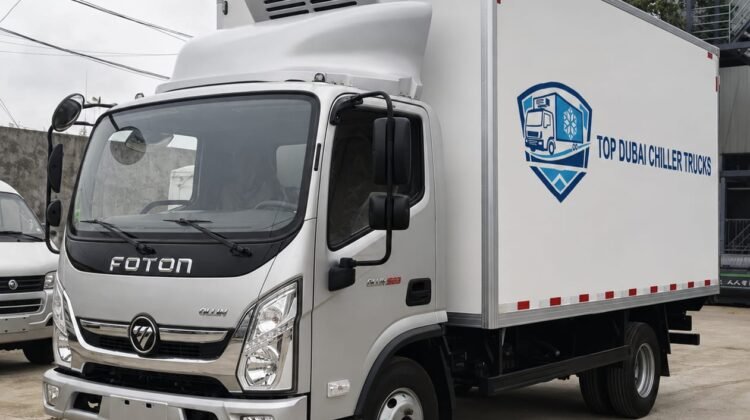
A purpose-built van with a Thermo King or Carrier-class unit and full insulation is engineered to maintain temperature, not just drop it briefly.
If a quote looks unusually cheap, this is often why.
Failure 2: No Temperature Recovery After Door Openings
Every time the doors open on a Dubai street, hot air floods in and cold air escapes.
What matters is how fast the van pulls the temperature back down before the next drop.
A strong system recovers within minutes; a weak one never catches up on a busy multi-stop route.
Ask any provider a direct question:
How quickly does your van recover temperature after a door opening in summer?
The answer tells you whether the engineering is real.
Failure 3: Skipping Pre-Cooling
Loading cargo into a warm van in summer is a mistake you cannot recover from.
The system spends the whole route chasing a temperature it should have reached before loading.
A disciplined operator pre-cools the box to target before the first box goes in, every single time.
Failure 4: The Wrong Vehicle for the Route
A single van running eight scattered drops across Dubai in August faces a very different challenge from one making two large deliveries.
More stops mean more door openings mean more heat load.
Matching vehicle capability and route design to summer conditions, not just to cargo volume, is what keeps the cold chain intact.
How to Choose a Chiller Van That Survives Summer
Before you book, confirm these five points with the provider:
- The van uses a built-in refrigeration unit, not a portable cooler.
- The cargo body is fully insulated on walls, floor, and roof.
- The van is pre-cooled before every load.
- Temperature is logged throughout the trip, so you get proof, not promises.
- The provider can explain their temperature-recovery performance on multi-stop routes.
For temperature-critical cargo such as medicines and vaccines, insist on validated, documented cold-chain handling. See our pharma cold transport standards.
And when you compare providers, our 10-point checklist helps you separate real cold chain from marketing.
Get a Reliable Chiller Van for UAE Summer
Don’t gamble your load on a hot afternoon.
Call or WhatsApp +971 52 932 8203 to Get a Quote on a van built for UAE summer.
FAQ
Can a chiller van hold temperature in Dubai’s 45°C summer?
A properly engineered, insulated van with a built-in refrigeration unit can. Portable coolers on ordinary panel vans usually cannot maintain temperature across a full route.
Why does my chiller van get warmer on multi-stop routes?
Each door opening lets hot air in. A strong system recovers temperature within minutes; a weak one falls further behind with every stop.
What is pre-cooling and why does it matter?
Pre-cooling means running the refrigeration down to target temperature before loading. In summer, loading into a warm box means the van never catches up.
How can I tell a real refrigerated van from a cheap one?
Ask whether the unit is built-in or portable, whether the body is fully insulated, and how fast it recovers temperature after door openings in summer.