
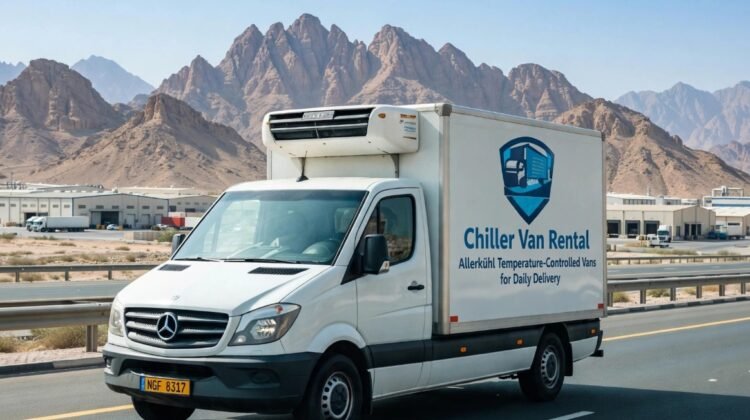
Chiller Van vs Freezer Van
Chiller Van vs Freezer Van: How to Choose the Right Refrigerated Vehicle in Dubai
Pick the wrong refrigerated vehicle and you don’t find out until the cargo arrives — wilted, thawed or refrozen. It’s the single most common cold-chain mistake we see in Dubai, and it comes down to one question most people answer too quickly.
Table of Contents
The one question that decides it
Before you compare specifications, prices or vehicle sizes, answer this: does your cargo need to stay cold, or does it need to stay frozen? That single distinction — chilled versus frozen — decides everything else, and it’s where most bookings go wrong.
People reach for a “refrigerated van” as if it’s one thing. It isn’t. A chiller and a freezer are built to hold entirely different temperature bands, and a vehicle set up for one cannot safely do the other’s job. Get this right and the rest of the decision — size, roof height, rental term — is easy.
The rule of thumb: if your product is sold or stored refrigerated but not solid — milk, salad, flowers, medicine — you need a chiller. If it’s sold or stored frozen solid — ice cream, frozen meat, frozen ready-meals — you need a freezer. When in doubt, match the vehicle to the temperature on the product’s own storage label.
What a chiller van does
A chiller van holds a steady 0°C to +5°C — cold enough to keep perishables fresh and safe, but not cold enough to freeze them. That temperature band is the correct one for the majority of everyday cold-chain cargo in Dubai:
- Fresh fruit, vegetables and salad leaf
- Dairy — milk, yoghurt, butter, cheese
- Bakery, pastries, chocolate and chilled desserts
- Cut flowers and floral arrangements
- Chilled beverages and juices
- Most temperature-controlled pharmaceuticals and vaccines
Because chilled cargo makes up so much daily delivery work — restaurants, pharmacies, florists, caterers — the chiller van is the workhorse of the fleet. If you’re moving perishables that shouldn’t be frozen solid, this is almost always your vehicle. For small daily routes, a 1-ton chiller van is the usual starting point.
What a freezer van does
A freezer van holds -18°C — cold enough to keep cargo frozen solid from pickup to delivery. That’s a completely different job, and it’s the right vehicle for:
- Ice cream and frozen desserts
- Frozen meat, poultry and seafood
- Frozen ready-meals and par-baked goods
- Frozen vegetables and fruit
- Any product whose storage label says “keep frozen”
A freezer van is not simply “a colder chiller.” Its insulation and refrigeration are engineered to pull cargo down to and hold it at -18°C. Put chilled produce in it and you’ll freeze and ruin it; put frozen goods in a chiller and they’ll start thawing. The temperature target has to match the cargo.
Chiller vs freezer: side by side
| Factor | Chiller Van | Freezer Van |
|---|---|---|
| Temperature | 0°C to +5°C | -18°C |
| Keeps cargo | Cold, not frozen | Frozen solid |
| Typical cargo | Produce, dairy, flowers, pharma | Ice cream, frozen meat & seafood |
| Common users | Restaurants, pharmacies, florists | Frozen-food distributors, caterers |
| Wrong-vehicle result | Frozen goods thaw | Fresh goods freeze & spoil |
The grey-area cargo that trips people up
Most cargo is obvious. A few items aren’t — and they’re where costly mistakes happen:
- Chocolate: chilled, not frozen. Freezing causes “bloom” (a white surface film) and ruins the texture. Use a chiller.
- Seafood: depends entirely on how it’s sold. Fresh fish on ice is chilled cargo; frozen fish is freezer cargo. Never assume — ask which one you have.
- Pharmaceuticals: most vaccines and medicines are chilled (typically +2°C to +8°C), but a few products are frozen. Always follow the product’s validated storage temperature, and for medical loads use dedicated pharma cold transport with logging.
- Bakery: finished cakes and pastries are usually chilled; par-baked and dough products are often frozen. Check before you book.
Quick tip: when a load is mixed or you’re unsure, tell your rental provider the actual products, not just “food” or “medical.” The temperature on the storage label is the answer — and a good operator will confirm the right vehicle before dispatch.
Why getting it wrong costs more in Dubai
In a mild climate, a brief temperature slip might be recoverable. In Dubai’s summer, it usually isn’t. With ambient temperatures above 45°C, a wrong-temperature or under-spec vehicle loses the battle fast — and the cost isn’t just the spoiled load. It’s the rejected delivery, the failed food-safety check, the client you let down, and the reputational hit that follows.
That’s why the chiller-versus-freezer decision matters more here than almost anywhere else. The vehicle has to be pre-cooled to the correct target before loading, hold that temperature through every door-opening on a multi-stop route, and prove it with a temperature record at the end. A vehicle set to the wrong band can’t do any of that, no matter how good the driver is.
What if you need both?
Plenty of routes carry chilled and frozen to the same stops — an e-grocery order with ice cream and fresh salad, a caterer with frozen desserts and fresh platters, a pharmacy run mixing frozen and chilled medicines. You don’t need two vehicles for that. A multi-compartment dual-temperature vehicle carries both at once in separate, independently-controlled zones, split by an adjustable insulated bulkhead—one trip, one driver, both temperatures held correctly.
🔑 Key takeaways
- Chiller = 0°C to +5°C (cold, not frozen); freezer = -18°C (frozen solid).
- Match the vehicle to the temperature on your product’s storage label — not to a vague cargo category.
- Watch the grey areas: chocolate and fresh seafood are chilled; frozen seafood and par-baked goods are frozen.
- In Dubai’s heat, a wrong-band vehicle can’t be rescued mid-route — get it right before dispatch.
- Mixed chilled + frozen load? Use one dual-temperature vehicle instead of two.
A 30-second decision checklist
- Read the storage temperature on your product’s label.
- Above 0°C (roughly +2°C to +8°C)? → chiller van.
- At or below -18°C, or labelled “keep frozen”? → freezer van.
- Some of each on the same route? → dual-temperature vehicle.
- Still unsure? Tell us the exact products — we’ll confirm the right vehicle before it leaves the yard.
Frequently asked questions
Q: What is the difference between a chiller van and a freezer van?
A chiller van holds 0°C to +5°C and keeps cargo cold but not frozen — produce, dairy, flowers and most pharmaceuticals. A freezer van holds -18°C and keeps cargo frozen solid — ice cream, frozen meat and seafood. The temperature band is the whole difference.
Q: Can a freezer van be used as a chiller?
It shouldn’t be. A freezer is engineered to pull cargo to -18°C, and running fresh produce or dairy in it will freeze and ruin them. Use a chiller van for chilled cargo and a freezer van for frozen cargo — the vehicle has to match the target temperature.
Q: Which van do I need for chocolate?
A chiller van. Chocolate should be kept cool (chilled), not frozen — freezing causes a white surface ‘bloom’ and spoils the texture. Hold it in the 0°C to +5°C chilled range.
Q: Is seafood chilled or frozen cargo?
It depends how it’s sold. Fresh fish and shellfish on ice are chilled cargo (0°C to +5°C); frozen fish and seafood are freezer cargo (-18°C). Always confirm which one you have before booking, because the wrong vehicle will ruin the load.
Q: What vehicle do I need for both chilled and frozen on one route?
A multi-compartment dual-temperature vehicle. It carries chilled (0°C to +5°C) and frozen (-18°C) in separate zones via an adjustable insulated bulkhead, so you deliver both on one trip with one driver instead of running two vehicles.
Q: How do I know which temperature my cargo needs?
Follow the storage temperature printed on the product’s own label. If it’s kept refrigerated but not frozen, you need a chiller; if it’s kept frozen, you need a freezer. When a load is mixed or unclear, tell your rental provider the actual products and they’ll confirm the right vehicle.
Top Dubai Chiller Trucks — Cold Chain Team
HACCP-certified refrigerated van and truck rental across Dubai and the UAE. We dispatch temperature-controlled vehicles every day, so this guidance comes from the road, not a brochure.
Not sure which vehicle you need?
Tell us your cargo and route — we’ll confirm whether you need a chiller, a freezer or a dual-temperature vehicle, and send a fixed, all-inclusive quote with same-day dispatch across Dubai and the UAE.